









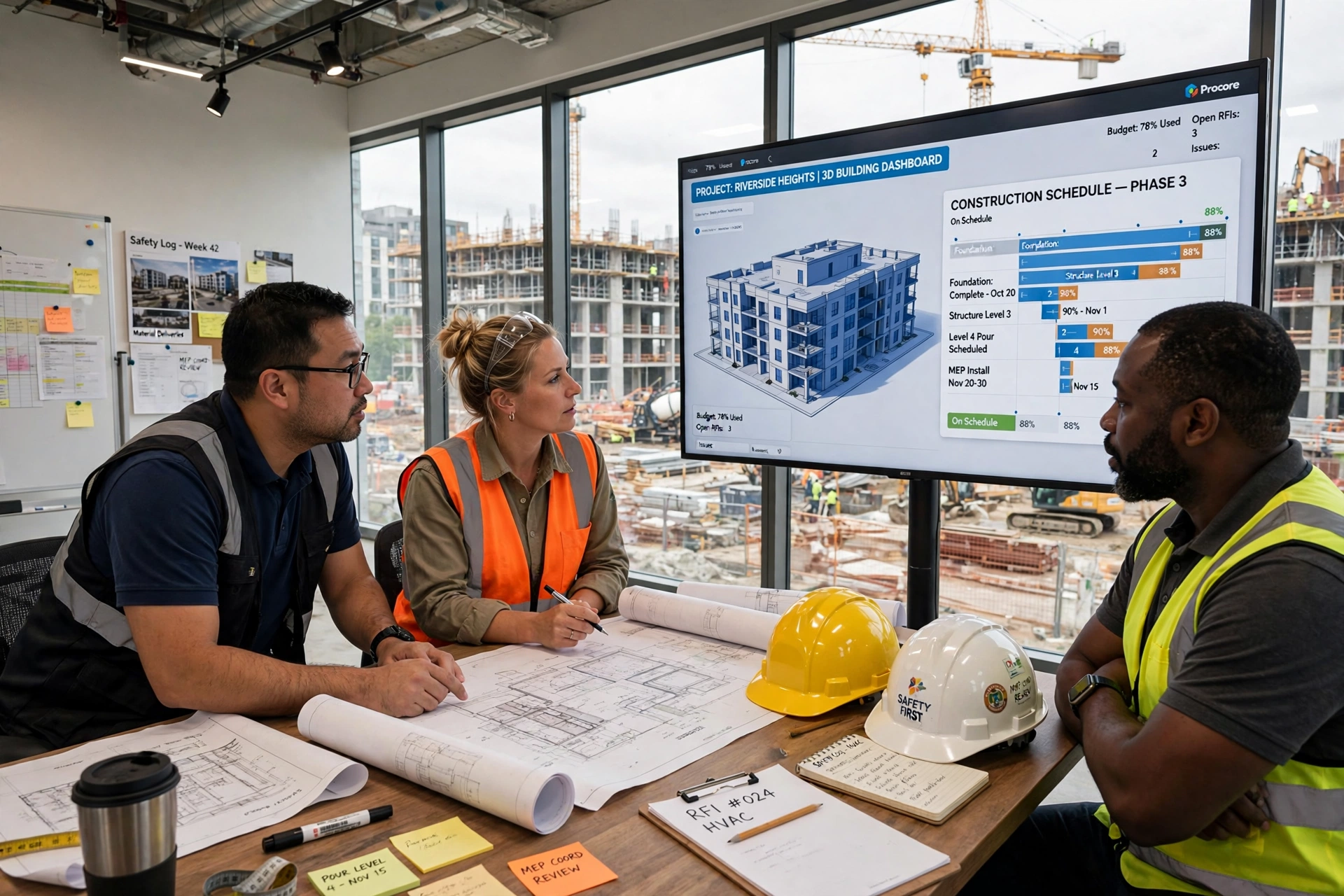
BuildPilot, a construction technology company, has introduced a new suite of artificial intelligence tools designed to help builders, contractors, and project managers keep jobs on schedule and on budget. The platform is aimed at general contractors, subcontractors, and development firms that juggle timelines, materials, crews, permits, and client updates across multiple sites at once. According to the company, the tools are meant to handle the planning, tracking, and paperwork that slow projects down, so site teams can spend more time building and less time chasing information.
The Problem
Construction has always been a business of moving parts, but the coordination challenge has grown harder. A single project can involve dozens of trades, shifting delivery dates, changing weather, and design revisions that arrive after work has already started. When one task slips, the delay often cascades — electricians wait on framing, drywall waits on inspections, and the whole schedule begins to drift.
Much of the daily work is administrative. Project managers spend hours updating schedules by hand, logging daily progress, comparing delivered materials against orders, and writing status reports for owners and architects. Safety documentation, change orders, and punch lists add another layer of paperwork, often scattered across emails, spreadsheets, and paper forms. When information lives in so many places, even a simple question — whether a delivery arrived, or whether an inspection was signed off — can take a string of calls to answer. For smaller firms running several jobs with lean office staff, that burden can mean problems are spotted late, when fixing them is already expensive, and supervisors end their days completing records instead of walking the site and planning the work ahead.
What the Tool Does
BuildPilot’s platform brings several AI-assisted workflows into a single workspace built for construction teams. According to the company, its key features include:
- Schedule forecasting that reviews progress, delivery dates, and task dependencies to flag likely delays early and suggest ways to resequence work
- Daily log automation that turns site photos, voice notes, and delivery slips into structured daily reports without manual typing
- Material and delivery tracking that matches orders, invoices, and on-site deliveries, alerting managers when quantities or dates do not line up
- Document search that lets teams ask questions across drawings, specifications, contracts, and change orders and get answers with source references
- Safety and compliance checklists that adapt to the work planned for the day and help supervisors document inspections and site conditions
- Owner and client updates that turn internal progress data into clear summaries, so stakeholders can see what was completed and what comes next
The company says the tools are designed to support experienced builders rather than replace their judgment: schedules, approvals, and safety decisions still remain with the people responsible for the site.
Why It Matters
The launch reflects a broader shift across the construction industry, where AI is moving from office software into the daily rhythm of the job site. Firms are under pressure to deliver faster while dealing with tight labour availability, volatile material costs, and clients who expect clearer visibility into progress. In that environment, even small gains in coordination can protect margins and reduce the rework that frustrates crews and owners alike.
Tools like BuildPilot’s sit in the middle of that pressure. By automating the mechanical parts of project management — logging, searching, tracking, and first-draft reporting — they promise to give supervisors back the hours they need for the work that genuinely requires experience: spotting a problem before it becomes a delay, coordinating trades in person, and making sound calls when conditions change. The approach also helps smaller contractors compete with larger firms that can afford dedicated planning and document-control staff.
What to Watch Next
The real test for BuildPilot will be how its tools perform on messy, real-world sites — where connectivity is patchy, plans change mid-week, and no two projects run the same way. It will also be worth watching how the company handles trust and accuracy, especially when its forecasts influence spending and staffing decisions. For now, BuildPilot’s launch is another sign that the race to bring practical AI into construction is well underway, and that the firms learning to pair site experience with smarter coordination tools may set the pace for the industry.