










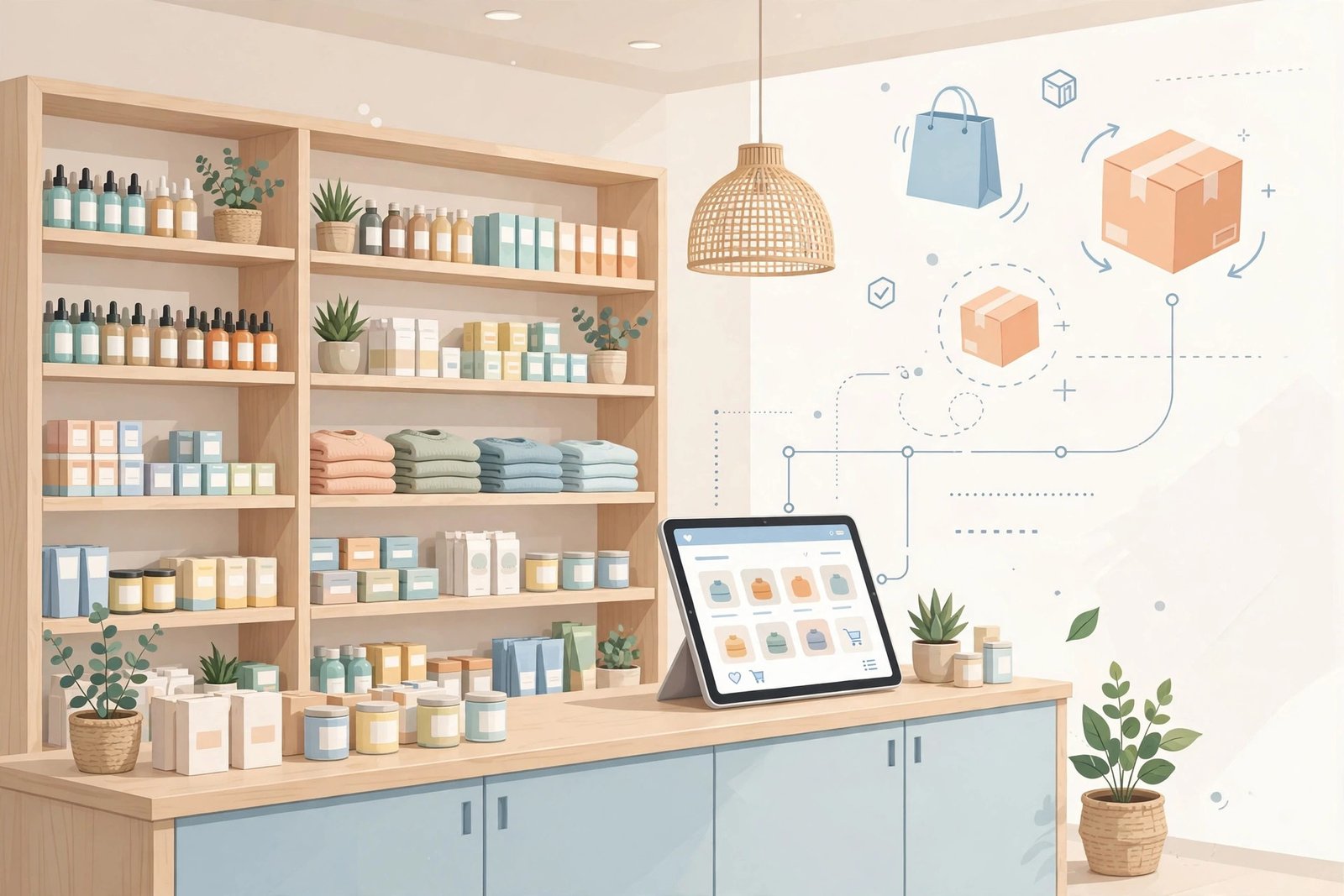
Retail technology company ShopMind has unveiled a suite of artificial intelligence tools built for online and brick-and-mortar retailers trying to keep up with rising customer expectations. The platform focuses on the operational work behind the storefront: writing product listings, answering routine shopper questions, forecasting which items to stock, and personalizing recommendations. According to the company, the tools are aimed especially at small and midsize retailers that lack the large technical teams of national chains but face the same pressure to respond quickly and sell intelligently.
The Problem
Running a retail business involves far more invisible labor than most shoppers realize. Every product needs a clear title, an accurate description, and the right category tags before it can sell online. Inventory decisions are a constant gamble — order too much and cash sits on shelves; order too little and popular items sell out. And customers now expect instant answers about sizing, shipping, and returns at any hour, including evenings and weekends when many small stores have no staff available.
Large retailers have spent years building data teams and proprietary systems to handle these challenges. Independent shops and growing e-commerce brands typically have not had that option, leaving owners to juggle marketing, merchandising, customer service, and stock management themselves.
What the Tool Does
ShopMind’s platform bundles several capabilities that address different parts of the retail workflow. According to the company, a retailer can upload basic product information and photos, and the system drafts polished listings complete with descriptions and suggested categories. On the customer-facing side, an AI assistant handles common questions around the clock. Key features include:
- Automated product listings: Draft titles, descriptions, and tags generated from basic product details and images.
- 24/7 shopper assistance: An AI assistant answers routine questions about products, shipping, and returns.
- Demand forecasting: Sales patterns are analyzed to suggest reorder timing and quantities.
- Personalized recommendations: Shoppers see product suggestions based on browsing and purchase behavior.
- Review and feedback summaries: Customer reviews are distilled into themes a store owner can act on.
The company says the tools connect with popular e-commerce platforms and point-of-sale systems, and that store owners approve listing drafts and assistant responses settings before anything goes live — the AI drafts, but the retailer decides.
Why It Matters
Retail is in the middle of a broad technology reshuffle. Online shopping normalized expectations — fast answers, relevant suggestions, reliable stock — that every seller is now measured against, regardless of size. AI tools that were once the preserve of the biggest chains are being packaged for the mainstream market, and that could narrow one of the most persistent gaps between large and small retailers.
The timing matters too. Labor remains expensive and hard to find for many service roles, and owners are looking for ways to extend their hours and responsiveness without extending payroll. At the same time, shoppers can be unforgiving of obviously automated interactions that feel cold or unhelpful, so the quality of these tools — and the judgment of the humans configuring them — will determine whether they strengthen a store’s reputation or cheapen it. Retailers also hold sensitive customer data, which makes privacy and security part of the purchasing decision.
The in-store side of the business stands to change as well. Many retailers now run their physical shops and online storefronts as a single operation, and tools that keep product information, pricing, and stock levels consistent across both can eliminate a common source of customer frustration: seeing an item listed as available online only to find the shelf empty. Store owners also point to the value of simply knowing what is selling. A small shop that once relied on gut feeling to decide what to reorder can instead look at clear summaries of trends, seasonal patterns, and customer feedback — the kind of analysis that used to require either expensive software or an employee dedicated to spreadsheets. None of this replaces the judgment of an experienced merchant, but it gives that judgment better raw material to work with.
What to Watch Next
ShopMind says upcoming additions include tools for planning promotions and analyzing which displays and product photos drive the most engagement. The broader trend to watch is how quickly independent retailers adopt AI as core infrastructure rather than a novelty — and whether the technology ultimately helps local and midsize stores compete, or simply raises the baseline for everyone.