








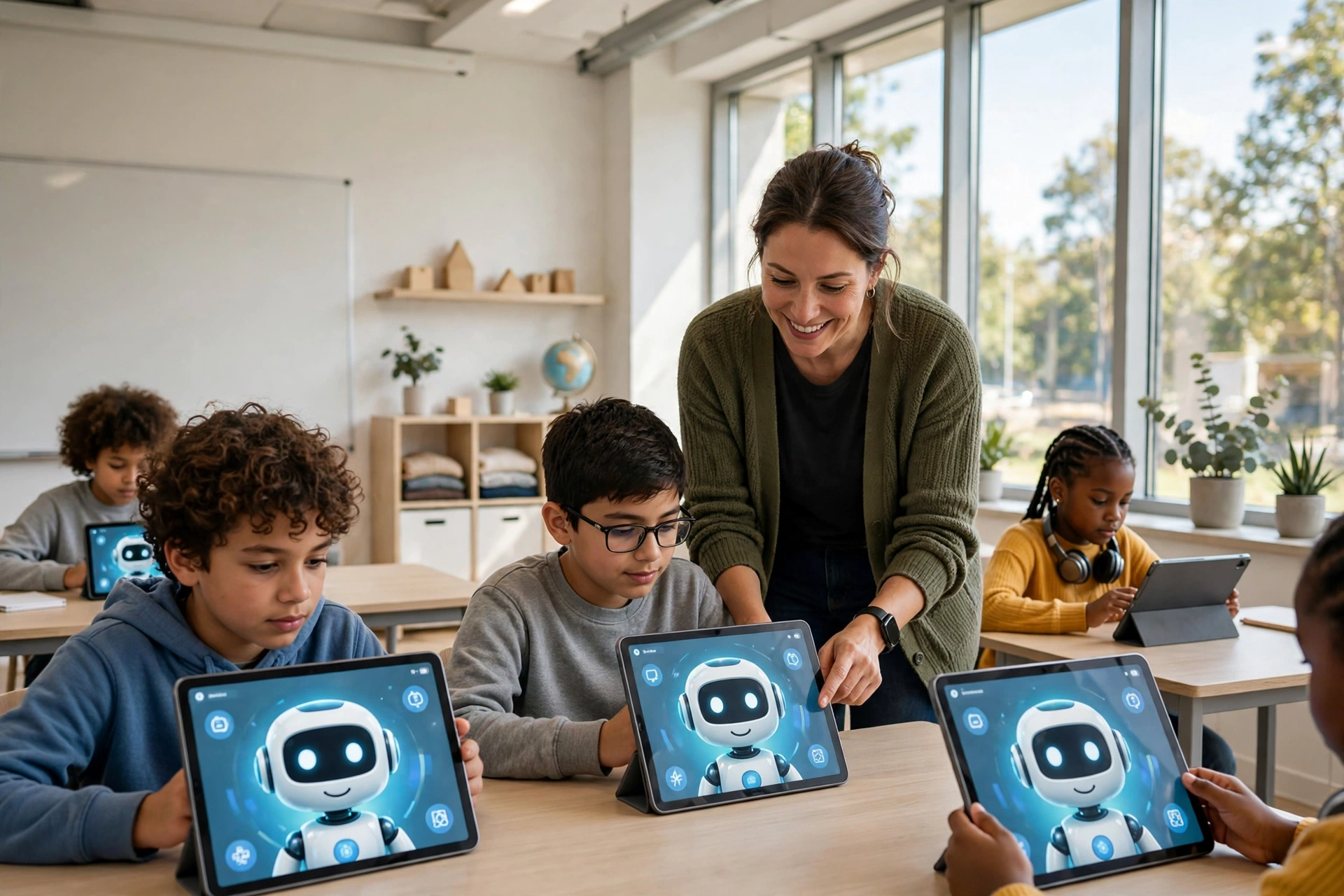
For generations, the classroom worked on a simple assumption: every student learns the same material, at the same pace, at the same time. In 2026, that assumption is quietly falling apart. Across the United States, schools are adopting AI tutoring systems that adapt lessons to each individual student, and the result is a noticeable shift away from one-size-fits-all instruction toward genuinely personalized learning. What began as a handful of pilot programs has become one of the defining education trends of the year.
What’s Changing
The new generation of AI tutors does far more than answer homework questions. These systems track how a student works through a problem, identify exactly where understanding breaks down, and adjust the next lesson accordingly. A student who breezes through fractions might be moved ahead to more challenging material within the same class period, while a classmate who is struggling receives extra practice, simpler explanations, and worked examples pitched at the right level.
Teachers, meanwhile, are getting a clearer picture of their classrooms than ever before. Instead of waiting for a quiz or exam to reveal who is falling behind, educators can see learning patterns in near real time: which concepts the whole class grasped, which ones need revisiting, and which individual students may need personal attention. Many schools are also using AI tools to handle routine work such as drafting practice questions, summarizing reading material, and giving students instant feedback on first drafts of essays, freeing teachers to spend more time on actual teaching.
Perhaps the biggest change is happening outside school hours. AI tutoring is available in the evening, on weekends, and during holidays, which means help is no longer limited to families who can afford private tutors. Students can ask questions the moment they get stuck, rather than waiting until the next school day, when the confusion has often hardened into frustration.
Why the Shift Is Happening
Several forces are converging at once. Learning gaps that widened during years of disrupted schooling have proven stubborn, and school districts are under pressure to close them without burning out their staff. Teacher shortages in many subjects have made individualized attention harder to deliver the traditional way. At the same time, the technology itself has matured: today’s AI tutors are more accurate, better at explaining concepts in multiple ways, and easier for schools to integrate with existing curricula and learning platforms.
Parents are also playing a role. Families who saw their children use AI homework helpers at home began asking why the school experience felt so different. And because many of these tools are built directly into platforms schools already use, adoption no longer requires a complete technology overhaul — a teacher can start with a single subject or a single class and expand from there.
What It Means
For students, the shift means learning that moves at their speed. Advanced learners are less likely to sit bored through material they already understand, and struggling learners get support before small gaps become large ones. For teachers, the change is double-edged but largely welcome: the technology handles repetition and routine feedback, while the human work of motivation, mentorship, and classroom culture becomes more central than ever.
There are real concerns to manage. Schools are setting clearer rules about when students should use AI help and when they need to work unaided, and questions about student data privacy remain a serious part of every purchasing decision. Educators are also watching to make sure personalization does not become isolation — learning alongside classmates, debating ideas, and solving problems in groups still matter, and the schools seeing the best results treat AI as one tool within a social classroom, not a replacement for it.
The Outlook
The direction for the rest of 2026 looks set. Expect AI tutoring to spread from math and reading into science, languages, and test preparation, and expect the tools to become better at recognizing not just what a student got wrong, but why. The schools leading this shift are not the ones chasing technology for its own sake; they are the ones using it to answer an old question in a new way: how do you give every student the lesson they actually need? In 2026, personalized learning is no longer a slogan. Increasingly, it is simply how the school day works.