








Supply chains used to be planned in spreadsheets, phone calls, and hard-won experience. In 2026, they are increasingly planned by software that never sleeps. Logistics teams across the United States are handing more of the day-to-day planning work — forecasting demand, scheduling shipments, rerouting freight — to AI systems that can weigh thousands of variables at once. The trend marks a clear shift: from supply chains that react to problems after they happen, toward supply chains that plan around problems before they arrive.
What’s Changing
The heart of the change is autonomous planning. Modern AI planning tools pull together sales forecasts, inventory levels, warehouse capacity, carrier availability, weather patterns, and port conditions, then build and rebuild shipping plans continuously. When a storm threatens a distribution route or a supplier ships late, the system does not wait for a planner to notice — it proposes a new plan, reassigns loads, and adjusts delivery promises on its own, flagging only the decisions that genuinely need a human call.
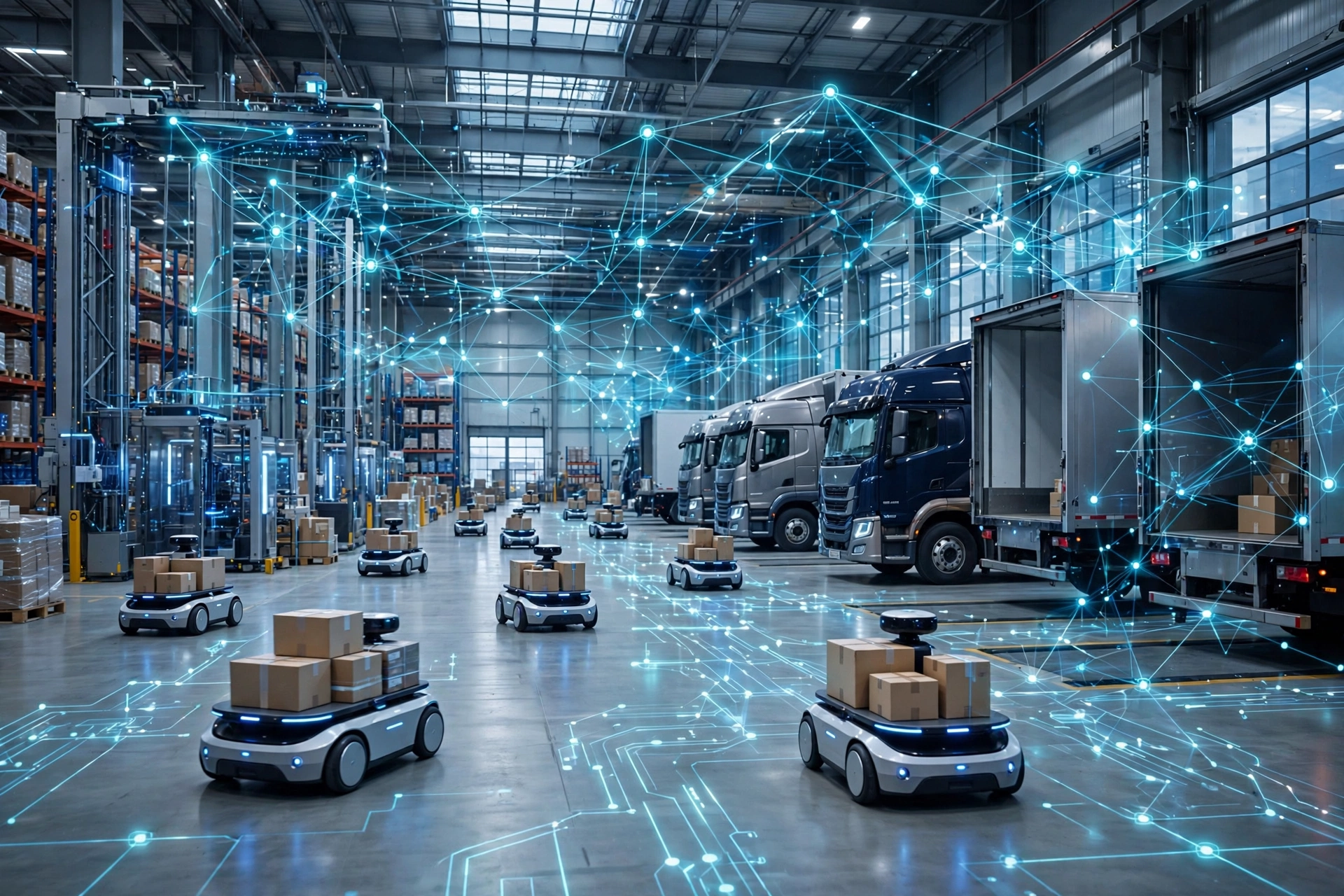
Inside warehouses, the same intelligence is coordinating fleets of mobile robots, deciding which orders get picked in which sequence, and balancing work across shifts. On the road, AI dispatch tools are matching loads to trucks more efficiently, cutting empty miles and grouping deliveries so vehicles run fuller. Even customer communication is becoming automated: instead of buyers calling to ask where an order is, systems now predict delays and send updates before the customer thinks to ask. Returns are being planned the same way, with systems deciding in advance whether a returned item should be restocked, refurbished, or rerouted to the nearest buyer.
Another notable change is how planning handles uncertainty. Older software planned for a single expected future. Today’s systems plan for many possible futures at once, keeping buffer stock and alternative routes ready for the scenarios most likely to disrupt the main plan.
Why the Shift Is Happening
The last several years taught logistics leaders a hard lesson: disruption is not an exception, it is the environment. Weather events, port congestion, labor shortages, and sudden demand swings have become routine, and manual planning simply cannot keep pace with that level of volatility. A human planner managing a regional network might juggle dozens of variables; an AI system juggles thousands, and it rechecks them every few minutes rather than every morning.
Cost pressure plays its part too. Fuel, warehousing, and transportation remain expensive, and shippers are expected to deliver faster while spending less. Autonomous planning promises exactly that combination — fewer empty trucks, smarter inventory placement, and less time lost to avoidable delays. There is also a staffing reality: experienced logistics planners are in short supply, and companies are using AI to stretch the expertise they have, letting smaller teams manage networks that once required far more people.
What It Means
For logistics professionals, the job is changing rather than disappearing. Planners are spending less time building routine schedules and more time handling exceptions, negotiating with partners, and making judgment calls the software cannot. The most valuable skill is shifting from knowing the network by heart to knowing how to supervise, question, and improve an automated plan.
For businesses that ship products, the practical effect is resilience. Orders are more likely to arrive when promised, not because nothing goes wrong, but because the plan adjusts when it does. Retailers and manufacturers are also holding inventory differently — placing stock closer to customers based on predicted demand rather than historical habit.
There are limits and risks. Autonomous systems are only as good as the data feeding them, and poor inventory data still produces poor plans. Companies are learning to roll out autonomy in stages, keeping humans in the loop for high-value or unusual shipments while the software proves itself on routine freight.
The Outlook
Through the rest of 2026, expect autonomous planning to spread from large national carriers and retailers down to mid-sized shippers that once considered such tools out of reach, as the software becomes simpler to adopt. The competitive line in logistics is no longer just trucks and warehouses — it is the quality of the plan behind them. Supply chains that plan themselves, and replan themselves the moment conditions change, are quickly becoming the standard everyone else has to match.