




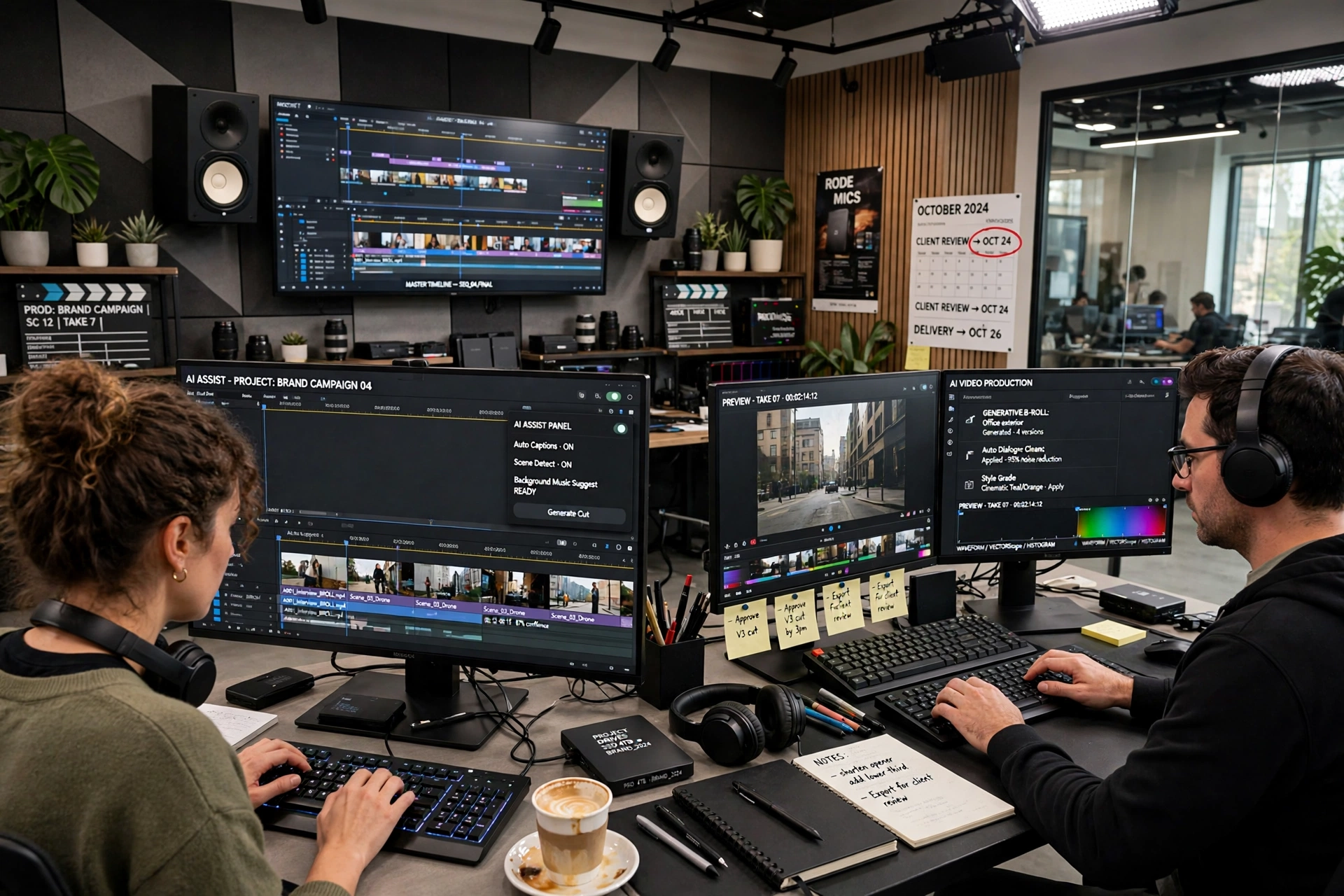
Entertainment production used to change at the speed of a release calendar: a new camera system one year, a new editing platform the next. In 2026, that pace is clearly quickening. Across film, television, streaming, and online video, studios and independent creators alike are adopting AI systems that help plan shoots, organise footage, generate early visual concepts, and prepare content for different audiences and formats. What began as experimentation in a few forward-looking production houses is becoming one of the defining creative-industry trends of the year — a shift toward AI-assisted production that pairs new tools with traditional craft.
What’s Changing
The clearest changes are happening in the work around the performance, rather than in the performance itself. Pre-production teams are using AI tools to break down scripts, estimate schedules, and visualise scenes before a set is built or a location is booked. Early concept images and rough animated sequences can be produced quickly, giving directors and producers something concrete to discuss instead of relying on written descriptions alone.
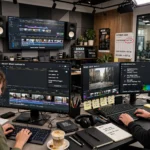
Post-production is changing just as quickly. Editors now work with systems that transcribe dialogue, log footage, and assemble rough cuts of routine material, freeing skilled editors to focus on pacing, tone, and story. Subtitling, dubbing preparation, and versioning for different markets — once slow, repetitive stages at the end of a production — are increasingly assisted by AI, which helps studios release the same programme in many languages and formats without the same long delays. Marketing teams are adapting too, testing trailer edits and promotional images with AI support before committing a full campaign budget.
Why the Shift Is Happening
Several forces are converging at once. Audiences expect a constant flow of new content across more platforms than ever, while production budgets are under pressure and skilled crew remain in high demand. A tool that shortens the distance between an idea and a viewable draft has obvious appeal, especially for smaller studios that could never afford the large teams the biggest productions employ.
The technology itself has also matured. Modern AI tools fit into existing editing and planning software instead of demanding an entirely new workflow, and they handle the repetitive, time-heavy tasks — searching hours of footage, formatting versions, preparing first drafts — far faster than manual work. At the same time, the industry is learning where the limits sit. Questions about originality, rights, and the proper crediting of creative work remain live, and the productions earning the most goodwill are generally those that are open about how the tools were used and clear that final creative decisions stayed with people.
What It Means
For creative workers, the shift does not point to studios without crews. It points to different work. Routine logging, transcription, and first-pass assembly are increasingly handled by systems, while human roles concentrate on direction, performance, design judgment, and the countless small decisions that give a production its character. Teams seeing the strongest results tend to involve editors, designers, and writers early, agree clear rules for how AI may be used, and treat the output as raw material to be shaped rather than a finished product.
For audiences and business leaders, AI-assisted production changes what is feasible. Niche programmes, local-language versions, and ambitious visual ideas that once failed on cost can now be attempted, and independent creators can work at a level of polish that previously needed a much larger operation. There are real concerns to manage as well. Studios must handle rights and consent carefully, protect unreleased material, and avoid a sameness that can creep in when many teams lean on similar tools. Assistance is only valuable if the result still feels authored.
The Outlook
The direction for the rest of 2026 looks set. Expect AI to spread further into planning, post-production, and localisation, and expect packaged tools aimed at small studios and solo creators to keep improving. The productions leading this shift are not the ones using AI for its own sake; they are the ones using it to answer practical questions: how do we plan better, edit faster, and reach audiences in their own language without losing what makes the work distinctive? In 2026, AI-assisted production is no longer a side experiment for the entertainment industry. Increasingly, it is part of how the work gets made.